
Knowledge Hub
Succession Planning in Family Businesses: Preparing the Next Generation for Sustainable Leadership
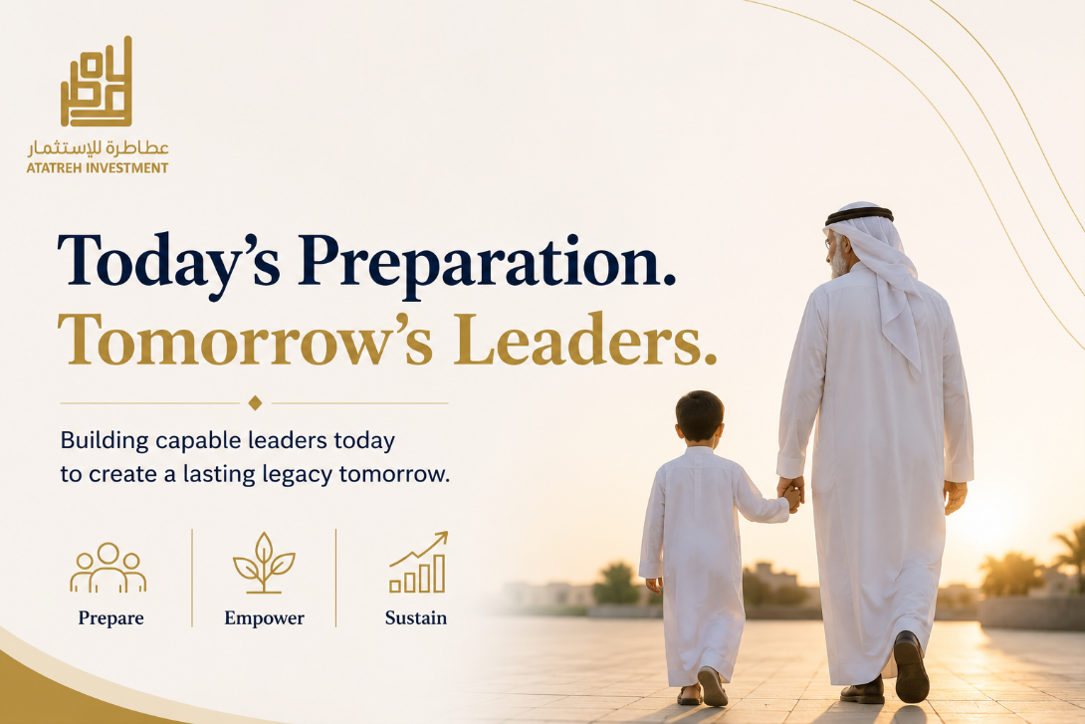
Family businesses are built with a long-term vision. Many founders dedicate decades to creating successful organizations that generate wealth, create employment, and contribute to economic development. As these businesses grow, expand into new markets, and become more complex, one factor becomes increasingly important in sustaining their success across generations: leadership succession.
Succession planning is not simply about identifying who will become the next chief executive. It is about developing capable leaders, ensuring smooth leadership transitions, preserving organizational knowledge, and strengthening the company's long-term strategy.
For many family businesses, succession planning is one of the most important strategic investments they can make.
Why Succession Planning Matters
Every successful business evolves, and leadership evolves with it. The question is not whether leadership will change, but how well the organization prepares for each new stage of its development.
Many family businesses postpone succession discussions because they are viewed as long-term priorities. However, organizations that begin planning early create stronger leadership pipelines, transfer institutional knowledge more effectively, and build greater confidence among employees, shareholders, customers, and business partners.
Without structured succession planning, leadership development may become inconsistent, organizational knowledge may not be fully transferred, and opportunities for future growth may be more difficult to capture.
Conversely, companies that prepare future leaders early are better positioned to maintain continuity, strengthen governance, preserve institutional knowledge, and sustain long-term growth.
Succession Is a Process, Not an Event
One of the most common misconceptions is that succession begins when leadership changes.
International experience demonstrates the opposite.
Effective succession planning often begins years before leadership transitions take place. Future leaders require time to gain operational experience, understand corporate governance, develop strategic thinking, and earn the confidence of employees, shareholders, customers, and business partners.
The transition should therefore be viewed as a structured leadership development journey rather than a single appointment.
Leadership Should Be Based on Capability
In successful family businesses, ownership and leadership are not always identical.
Being part of the owning family does not automatically qualify an individual to lead a growing enterprise.
Leadership should be determined by competence, integrity, experience, strategic vision, and the ability to manage increasingly complex organizations.
Many successful family businesses establish objective evaluation criteria for future leaders, combining education, professional experience, leadership performance, and governance capabilities before assigning executive responsibilities.
This professional approach strengthens both family unity and business performance.
Developing the Next Generation
Preparing future leaders extends beyond academic qualifications.
The next generation should gain practical experience across multiple business functions, understand financial management, participate in strategic planning, develop leadership skills, and become familiar with governance principles before assuming executive positions.
Exposure to external organizations, international markets, and independent professional experience often broadens leadership perspectives and strengthens decision-making capabilities.
The objective is not simply to inherit responsibility but to earn it through competence, experience, and continuous development.
The Role of the Board of Directors
A professional Board of Directors plays a critical role in succession planning.
Rather than allowing leadership decisions to rely solely on family expectations, the board provides objective oversight throughout the succession process.
Its responsibilities include evaluating leadership readiness, monitoring development plans, reviewing succession strategies, and ensuring that leadership transitions support the long-term interests of the business.
Independent directors can add particular value by providing impartial assessments and helping ensure that leadership decisions remain aligned with the company's long-term objectives.
What International Research Shows
The International Finance Corporation (IFC), in its Family Business Governance Handbook (2008), identifies succession planning as one of the most critical governance responsibilities within family businesses. The handbook emphasizes that succession should be planned well in advance and integrated into the company's overall governance framework.
The PwC Global NextGen Survey 2024 highlights that next-generation family business leaders increasingly prioritize professional governance, innovation, digital transformation, and sustainability. The survey also shows that younger generations expect clearly defined leadership pathways and structured succession processes rather than informal appointments.
Similarly, the KPMG Global Family Business Report 2025 concludes that organizations with mature governance frameworks are significantly better prepared to develop future leaders while maintaining business continuity and stakeholder confidence.
The G20/OECD Principles of Corporate Governance (2023) further emphasize that effective governance requires transparent leadership succession processes, accountability, and long-term strategic oversight to support sustainable organizational performance.
Looking Beyond One Generation
The most successful family businesses think beyond today's leadership.
They invest in governance systems that allow every generation to build upon the achievements of the previous one.
Succession planning is not simply about leadership transition. It is about preserving the company's vision, strengthening institutional capabilities, and preparing future leaders to seize new opportunities while navigating an increasingly dynamic business environment.
When succession is approached strategically, it enhances organizational resilience, strengthens stakeholder confidence, and ensures that the business continues creating value for generations to come.
Conclusion
A family business does not become multigenerational by chance.
It becomes multigenerational through deliberate planning, disciplined governance, and continuous leadership development.
Succession planning is therefore not a future initiative, it is a strategic investment in the continuity, resilience, and long-term success of the enterprise.
Organizations that begin developing tomorrow's leaders today are far more likely to preserve both their family legacy and their competitive advantage in an increasingly complex global business environment.
References
- International Finance Corporation (IFC). (2008). Family Business Governance Handbook. World Bank Group.
- PwC. (2024). Global NextGen Survey 2024.
- KPMG. (2025). Global Family Business Report 2025.
- Organisation for Economic Co-operation and Development (OECD). (2023). G20/OECD Principles of Corporate Governance. OECD Publishing, Paris.